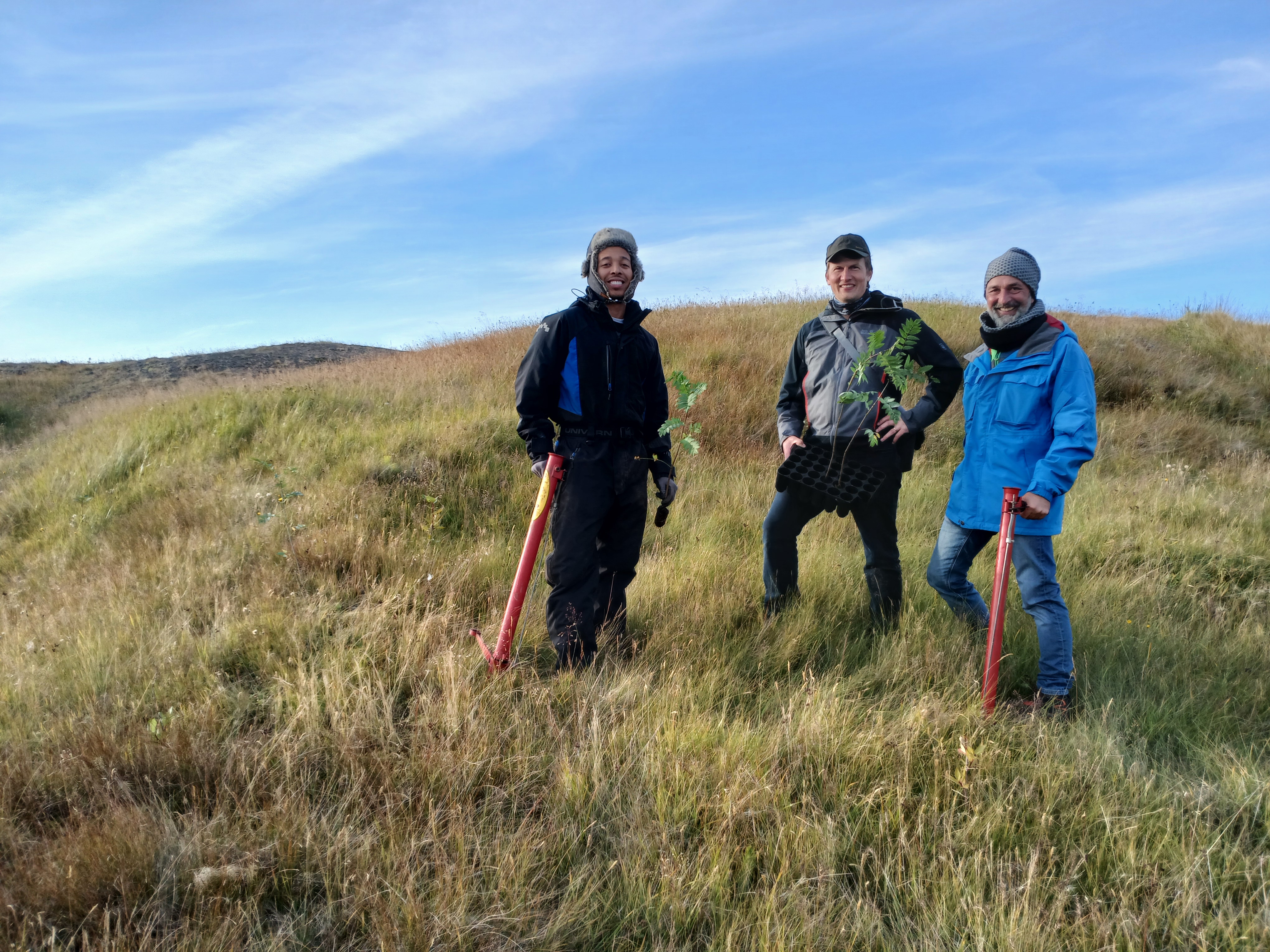
So here we are: on a clear morning in early September, on a slope of open heathland in north-west Iceland, we planted a tree. Then another, and another, until 120 young trees stood in a ground that had held only grass, moss and bare, wind-worn soil that morning. It was a small thing to do on a large piece of land. It was also the moment Reforest Iceland stopped being a plan and became a forest in the making.
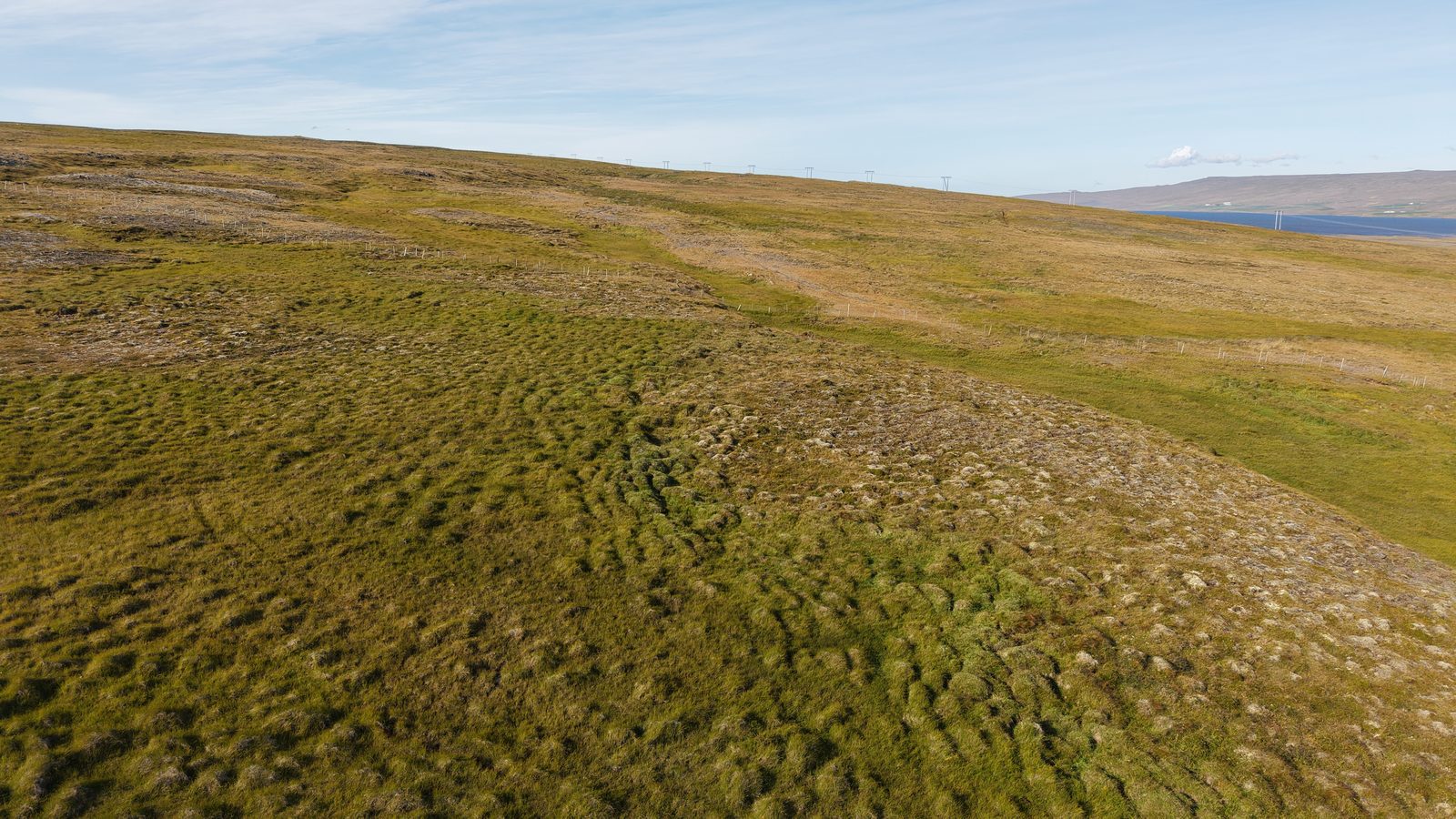
The place is Fagrabrekka, a stretch of heath in the north-west of the country. You drive past it if you do the ring road in Iceland. From the air it looks the way much of rural Iceland looks today: green in late summer, but thin, eroded in places, and treeless to the horizon. It is beautiful and it is degraded, and both of those things are true at once. We have partnered with the family that owns this land to bring woodland back to it, slowly and properly, over many years.
Why we started small
One hundred and twenty trees is not many, and we planted them that way on purpose. This first planting is mostly native downy birch and rowan – the two trees that built Iceland’s original woodlands – with a small number of hardy larch set into the poorest ground, where young birch and rowan would struggle to take hold. Choosing the right tree for each patch of soil matters more than planting a big number in a hurry. We would rather learn this land one season at a time and get it right than promise a headline figure we cannot stand behind.
We're also only at the start of our journey, which means we are still building up our finances. If you want us to plant more, feel free to support us!
Everything about how we work follows from our principles. Real, named Icelandic land you could stand on. Native trees first. Honest documentation, including the aerial and ground footage we filmed on planting day, so that anyone who joins us can watch this hillside change with their own eyes rather than take our word for it.
Why Iceland
When people first settled Iceland, birch woodland covered somewhere between 25-40% of the country. By the middle of the last century, after generations of grazing and felling, that had fallen to less than one percent of the land. Iceland did not lose its trees to bad luck. It lost them slowly, and it can get them back the same way.
For me this is personal. I grew up planting and thinning trees on our family farm in Skagafjörður, in northern Iceland, and I have watched bare slopes there turn into real woodland within a lifetime. Bringing trees back to Icelandic land is not an abstract cause to me; it is something I have done with my own hands since I was a child, and something I wanted to do at a scale that matters.
A word on what these first trees are and are not. They are a biodiversity act and the start of a living woodland. They are not a quick fix, and we will never describe them as one. A birch does not become a forest in a season; it becomes one over decades. The honest promise we can make is patience, care and proof.
What comes next
This is the first of many updates. In the coming weeks we will take you to the nursery where our young trees begin their lives, tell the fuller story of how Iceland lost its woodlands and how they can return, and share news of a book we are finishing that sits close to all of this. And, of course, we will keep planting.
One hundred and twenty trees today. Many thousands to come. This is where it begins.